
Before approving a painted kitchen, see a physical sample in the proposed colour and finish, compare it with your worktop and flooring, and inspect the door profile and handles together. Record the exact choices in the specification. The aim is to approve the complete combination, rather than rely on a colour name or a photograph.
This checklist is for buyers who have narrowed their choice and are preparing to order a painted Shaker or bespoke kitchen. If you are still deciding on construction, start with our in-frame kitchen guide or the explanation of in-frame versus in-frame effect, then return to the finishing details.
Ask what the sample actually represents
A paint card, a painted board and a complete sample door answer different questions. Ask whether the sample represents the proposed door material, surface texture, colour and final finish. If it demonstrates only the colour, request a separate example of the finish and door profile you are ordering.
Check how the manufacturer describes the finish, and whether visible grain is part of the intended appearance. A photograph can help establish a direction, but it cannot settle every detail. Keep the sample’s reference with your paperwork so the agreed choice can be identified later.
Look at the colour where the kitchen will be used
View the sample vertically, as a cabinet door will sit, as well as beside the horizontal worktop sample. Move it between the brighter and more shaded parts of the room. Look during the day and under the lighting you expect to use in the evening.
If the room is being extended, discuss which aspects of its eventual light are still uncertain. Your existing room may be a poor guide to the completed space. Ask the designer how to review the shortlist alongside the planned glazing, flooring and lighting without pretending those conditions can be reproduced perfectly in advance.
Build a small, complete sample set
Place the cabinet finish, worktop, flooring and handle together. Include the island colour if it differs from the surrounding cabinets. Then take something away: if the combination feels crowded, identify which element should lead and which should provide a quieter background.
1909’s paint palette presents colour alongside worksurfaces and finer details such as handles. That is a useful way to organise your own selection, whether your chosen kitchen comes from that collection or another specified range. Confirm the actual available colours and finishes for your proposal.
Check the profile as carefully as the paint
The width of a frame, the depth of a panel and the position of a bead all contribute to the finished appearance. Ask to see the chosen door profile rather than a different door painted in a similar colour. Review a corner, a drawer front and an end panel on the drawings so the detail makes sense across the room.
Our beaded Shaker guide explains where decorative detailing belongs in the wider design. A sample is the opportunity to judge whether that detail suits you at close range, and whether the handle size and position work comfortably with it.
Use this approval checklist
| Selection | What to record |
|---|---|
| Door and frame | Range, profile, construction and any selected bead or moulding. |
| Painted finish | Colour reference, finish description and the sample used for approval. |
| Island and surrounding cabinets | Which colour goes on each part of the plan, including exposed ends. |
| Handles | Design, size, finish and proposed position on doors and drawers. |
| Adjacent materials | Worktop, splashback and flooring selections, with any undecided items identified. |
| Care and future changes | Relevant care instructions and the process for repairs, touch-ups or later replacements. |
Use project photographs to explain the relationship
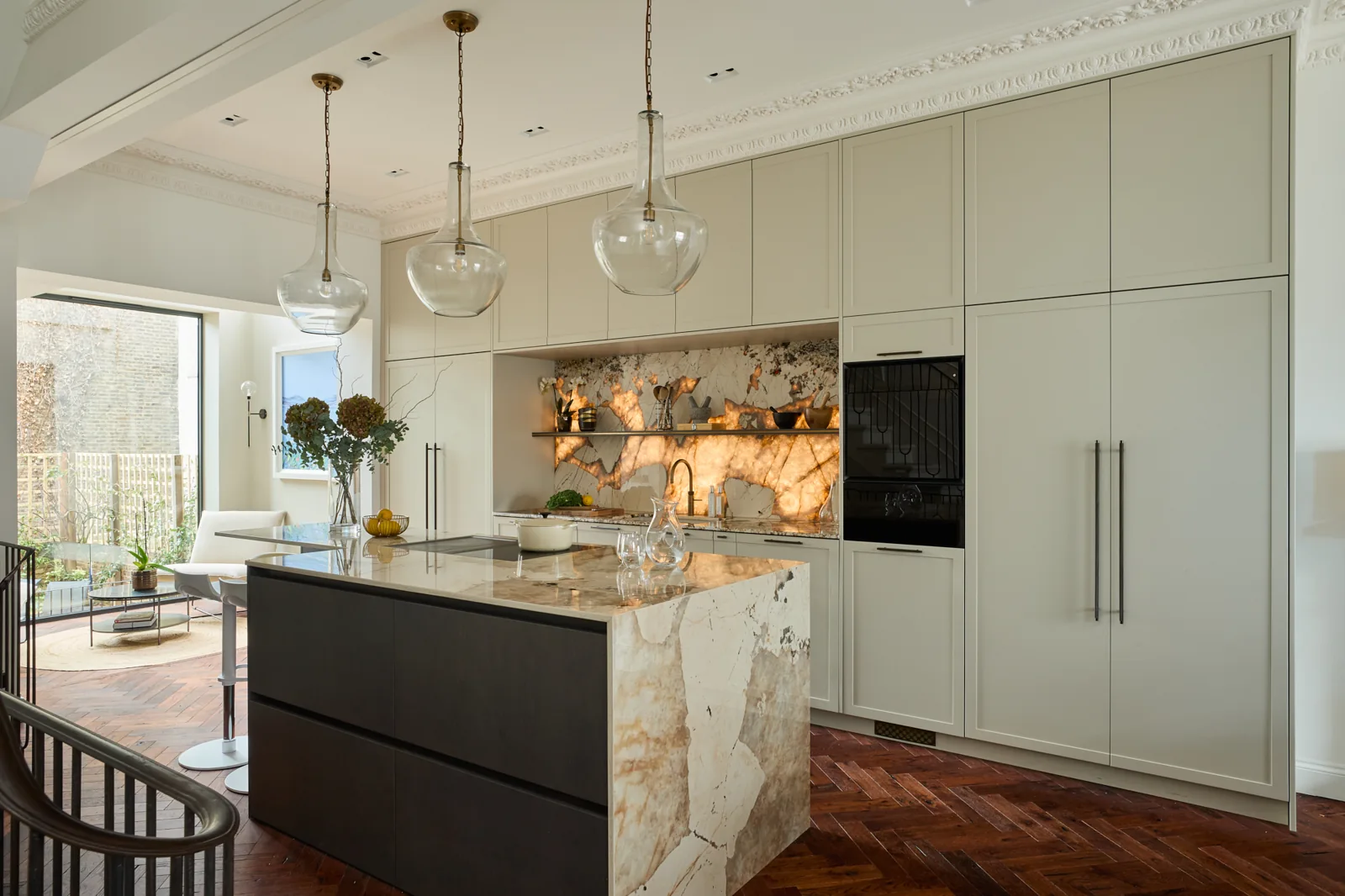
In our Luxury of London project, pale perimeter cabinetry contrasts with a dark island and a strongly patterned surface. That relationship is something you can discuss with a designer: which parts of your room should stand out, and which should connect more quietly?
Bring the photograph as a visual reference, then approve your own specification from samples and drawings. We would not identify an exact paint, material or finish from the image alone. The same approach helps when you are combining details from several kitchens you like.
Ask about aftercare before placing the order
Request the care instructions for the selected finish. Ask which cleaning products and methods are recommended, how marks or damage should be assessed, and who handles a repair enquiry. Establish whether touch-up materials or replacement parts are available and how a future colour match would be approached.
Keep outstanding selections clearly marked. If you change your mind after approval, ask what can still be changed and whether the cost or programme will be affected before authorising it. A clear record protects the design you have chosen and helps the team order the intended components.
Bring your shortlist to a design consultation
Bring your plans, inspiration photographs and any samples you already have to a Sheraton design consultation. We can help relate the finishes to the layout and the cabinetry you are considering. If you already have a proposal, our kitchen quote review is a useful place to discuss an alternative specification.
Your questions, answered
Is a paint colour name enough to approve kitchen cabinetry?
Record the colour reference and the proposed finish, door material and profile. Ask which physical sample represents the ordered product, especially if the example you have seen demonstrates the colour but uses a different door or finish.
Should I look at kitchen samples at home?
If samples can be taken home, view them with your proposed worktop and flooring in the parts of the room where the cabinetry will sit. Look at different times and under evening lighting. Discuss any major changes to glazing or lighting in the planned room.
Should handles be chosen before the kitchen is ordered?
Confirm the handle model, size and finish, and agree when its position must be finalised. Ask the supplier which drilling or fitting decisions are made during manufacture and which are completed on site.
Can a painted kitchen always be touched up invisibly?
Do not assume an invisible repair is guaranteed. Ask the supplier about the selected finish, its recommended repair process and any limitations on matching an existing colour or sheen. Keep the original specification and care information.